Monday, June 2, 2025

Easy Ways to Embed More Meaning into Decoding Instruction

Here are 10 easy ways to embed more meaning into decoding instruction in K–3 classrooms, ensuring students not only sound out words but also understand what they're reading:


1. Use Real Words in Practice

  • Prioritize decoding real, high-frequency words over nonsense words.

  • Example: Instead of “tad” or “zib,” use “cat,” “run,” or “hop.”


2. Connect to Vocabulary

  • Briefly define unfamiliar words that students decode.

  • Use them in a sentence and ask students to use them too!


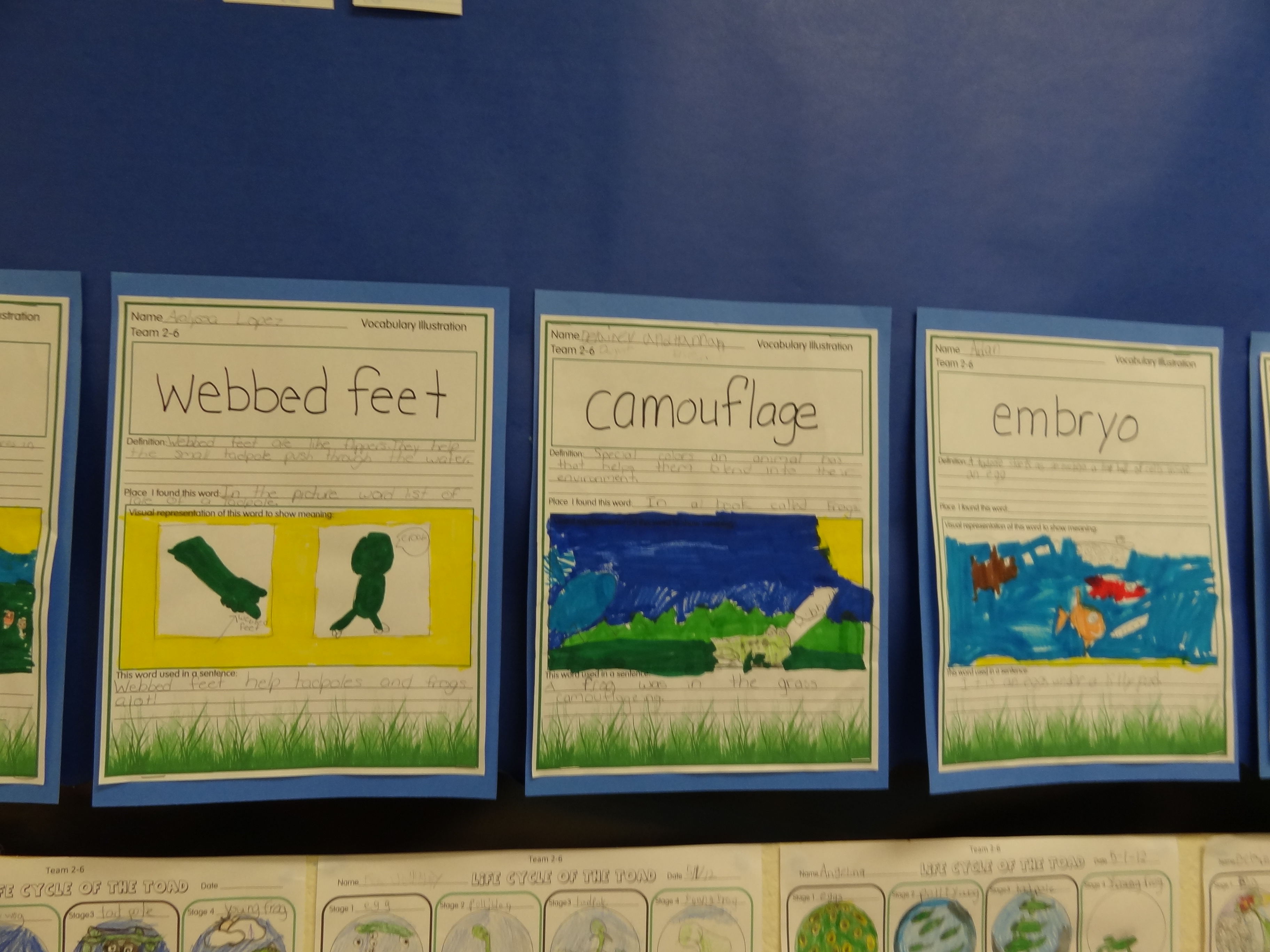
3. Tie Words to Visuals

  • Pair decoded words with pictures to solidify meaning.

  • Example: Show a picture of a fox after decoding /f/-/o/-/x/.


4. Build Sentences with Decoded Words

  • Encourage students to use new decoded words in oral or written sentences.

  • Helps link phonics with syntax and meaning.


5. Read Decodable Texts With Purpose

  • Choose decodable books with simple storylines.

  • Ask comprehension questions (e.g., Who? What happened? Where?).


6. Anchor Words to Background Knowledge

  • Link new words to students' experiences.

  • Example: If decoding "dig," connect it to gardening or sandbox play.


7. Incorporate Storytelling

  • Turn decoding into a storytelling challenge.

  • After decoding words like “bat,” “ran,” and “sun,” ask: “Can you tell a story with these?”


8. Use Think-Alouds

  • Model your thinking as you decode and make meaning of the text.

  • “Hmm, I sounded out ‘hop’—that’s what bunnies do!”


9. Act It Out

  • Physically act out decoded words when possible.

  • Great for kinesthetic learners and memory retention.


10. Make It Interactive

  • Use games where students match decoded words to pictures, definitions, or sentence blanks.


Thursday, May 22, 2025

Big Six...A Necessary Framework


As an educator, regardless of the reading program my district required I use, I always considered the "Big Six" components of reading instruction because these elements are scientifically proven to be essential for developing strong, proficient readers. These six  pillars are:

  1. Oral Language

  2.  Phonemic Awareness

  3.  Phonics

  4.  Fluency

  5.  Vocabulary

  6.  Comprehension


Here’s why they matter universally:


1. They Represent the Core of How Reading Works

Each of the Big Six targets a specific cognitive skill necessary for reading. Together, they form a complete framework:

  • Oral Language is the foundation for reading and writing. A strong command of spoken language supports vocabulary development, sentence structure understanding, and listening comprehension. Regardless of the reading program, students need to 

            communicate, listen, and understand spoken language to make sense of written text.

  • Phonemic awareness helps students understand and manipulate the sounds in spoken words.

  • Phonics connects those sounds to letters and helps students decode written text.

  • Fluency builds speed and accuracy, enabling smoother reading.

  • Vocabulary ensures students know the meaning of the words they read.

  • Comprehension allows them to make sense of and engage with the text         

Regardless of the program used, omitting any of these risks will leave students with critical skill gaps.


2. They Provide a Research-Based Foundation

The National Reading Panel and subsequent studies have shown that these six elements are non-negotiable for effective reading instruction. Programs that neglect or underemphasize any of them tend to be less effective, especially for struggling readers.


3. They Ensure Equity in Instruction

When educators use the Big Six as a lens, they can evaluate and supplement any program to meet the needs of all students. This is especially important for students with dyslexia, English language learners, and others who need more structured support.


4. They Create a Common Language and Framework

When all educators—classroom teachers, interventionists, administrators—align around the Big Six, it creates consistency across grade levels and schools. This shared foundation enables teams to collaborate, track progress, and make informed instructional decisions.


5. They Empower Teachers to Think Critically

Rather than blindly following a program, teachers who understand the Big Six can adapt and fill gaps in instruction. This helps them meet diverse student needs and stay responsive rather than rigid.


Friday, May 24, 2024

The Big Six in Effective Reading Instruction...Fitting it All In! PHONICS!

Phonics 

Explicit and systematic phonics instruction is critical for young readers. Direct instruction in this area is crucial and needs to be a part of our daily literacy routine. 


In my classroom, I used a simple 6-step method for teaching phonics. 

As a daily intro to the literacy block, I  meet with all students to go through these six steps to work through our spelling patterns and new words for the week. 

1.  Introduction...Develop Phonemic Awareness...I use Elkonin boxes, also known as sound boxes, to help my readers build (continue to build) phonological awareness skills by segmenting words into individual sounds (phonemes).  I would draw one box for each sound in target words. I also use the Elkonin boxes in phonics instruction to support phoneme-grapheme mapping.

2. Introduce/Practice Sound/Spelling...Introduce the new phonics concept explicitly. This might involve explaining a new letter-sound relationship, a spelling pattern, or a decoding strategy. The introduction should be clear and concise, providing a strong foundation for the subsequent steps.

3. Modeling/ Blend Words...In this step, demonstrate how to apply the phonics concept through modeling. You might read aloud, highlighting the target sounds or spelling patterns, and showing how to blend sounds to form words. This visual and auditory demonstration helps students understand how to use the phonics rule in practice.

4. Guided Practice/Build Automatic Word Recognition...Students practice the new concept with teacher guidance. This involves activities where the teacher can provide immediate feedback and support. Guided practice might include reading words, sentences, or short passages that focus on the targeted phonics rule, with the teacher assisting as needed.

5.  Independent Practice/Apply to Decodable Text...Students work independently to apply the phonics concept. This step reinforces learning through practice without immediate teacher support, helping students to internalize the new skills. 

6. Word Work for Decoding and Encoding...Students apply the phonics concept in more comprehensive reading and writing activities. This step ensures that students can transfer their phonics knowledge to real-world contexts, enhancing reading fluency and comprehension. Application activities might include reading books that incorporate the new phonics rule, writing stories or sentences, or engaging in spelling exercises.


Each of these steps builds on the previous one, ensuring a thorough and methodical approach to phonics instruction. This structured method helps students develop a solid understanding of phonics, which is crucial for reading and writing proficiency.

Wednesday, May 22, 2024

Phonemic Awareness and Phonics: Critical Components of Reading Instruction from Early to Upper Grade Elementary Students


Phonic and phonemic awareness are critical components of reading instruction from early to upper elementary grades because they lay the foundation for strong reading skills and comprehension. 

Here's why they are so important:

1. Phonemic Awareness

Phonemic awareness refers to hearing, identifying, and manipulating individual sounds (phonemes) in spoken words. It is a subcategory of phonological awareness, which also includes recognizing larger units like syllables and rhymes. Phonemic awareness is crucial because:

  • Foundation for Reading: Phonemic awareness helps students understand how sounds are connected to letters, which is the basis for decoding words. When children can break down words into individual sounds, they can more easily blend those sounds together to read unfamiliar words.

  • Word Recognition: Early phonemic awareness allows students to recognize words by sight, making them faster readers. When children can hear the sounds in words, they can decode or sound out unfamiliar words as they encounter them.

  • Improves Spelling: Knowing the sounds that make up words helps with spelling, as phonemic awareness enables students to segment and blend sounds in the correct sequence.

2. Phonics

Phonics refers to the relationship between sounds (phonemes) and their corresponding letters or letter combinations (graphemes). It’s the application of phonemic awareness in reading and writing. Phonics is important because:

  • Decoding Words: Phonics teaches children how to decode or "sound out" words. It helps them connect the sounds they hear to the letters on the page, which is key for reading fluently. Without phonics instruction, students may struggle to make sense of unfamiliar words.

  • Word Construction: Phonics instruction also teaches children how to construct words. As students learn phonetic patterns (like "sh," "ch," "ing"), they gain tools for spelling and forming words on their own.

  • Fluency: Strong phonics skills lead to improved reading fluency, which is the ability to read smoothly and with expression. When children can quickly decode words, they can focus on the meaning of the text rather than getting stuck on individual words.

3. Importance Across Grades

Both phonemic awareness and phonics are not just for early grades—they continue to play an essential role in the upper elementary grades as well:

  • Transition to Complex Texts: As students move into higher grades, they encounter more complex texts with unfamiliar words. Strong phonics skills allow them to continue decoding these words efficiently.

  • Vocabulary Development: Phonics helps children build their vocabulary because they are able to break down longer or unfamiliar words into recognizable parts. This makes it easier for them to learn new words and understand their meanings.

  • Comprehension: The ability to decode words easily means children can focus more on understanding what they are reading, rather than struggling with each individual word. This improves overall comprehension and helps students become more engaged with texts.

4. Continued Support for Struggling Readers

Phonemic awareness and phonics instruction can also be vital for students who struggle with reading. Some children may need extra support in these areas to catch up with their peers. Continued emphasis on these skills throughout elementary school ensures that all students have the necessary tools to succeed in reading.

Phonemic awareness and phonics are essential for helping students decode words, build fluency, and understand what they read. These skills provide the foundation for reading success and continue to support students' literacy development as they progress through the grades.

Vocabulary

Phonological Awareness

Oral Language

Wednesday, July 5, 2023

Meeting the needs of the diverse learners in classrooms today...let's take a peek!

Meeting the needs of the diverse learners in today's classrooms will always be a challenge for teachers. In fact, studies show that it has always been.  With all of the debate around Balanced Literacy and The Science of Reading these days, teachers are grasping at straws trying to figure out ways to ensure that the needs of all students are being met. The Science of Reading emphasizes the importance of teaching oral language, phonics, phonemic awareness, vocabulary, fluency, and comprehension explicitly and systematically. Educators can use evidence-based instructional practices to help students develop these critical reading skills.


Tuesday, November 15, 2022

QFT...Question Formulation Technique


The QFT (Question Formulation Technique) is a structured method for generating, improving, and prioritizing questions. Developed by the Right Question Institute, it’s designed to enhance critical thinking and problem-solving skills. Here’s a summary of the process:

  1. Identify the Problem or Topic: Start by selecting a topic or problem that you want to explore. This can be a broad subject or a specific issue.

  2. Generate Questions: Use the QFT process to create as many questions as possible about the topic. Aim

    for open-ended questions to encourage deeper thinking and exploration.

  3. Improve Questions: Review the questions and refine them to make them more specific, clear, and focused. This often involves turning closed questions into open ones and clarifying any ambiguities.

  4. Prioritize Questions: Decide which questions are most important or relevant to the issue at hand. This step helps in focusing efforts on the most critical questions.

  5. Reflect on the Process: Evaluate the effectiveness of the questions and the QFT process itself. Reflect on what worked well and what could be improved in future sessions.

The QFT technique emphasizes the importance of asking the right questions rather than jumping straight to answers. It’s used in various educational settings to develop students' questioning skills, promote engagement, and foster a deeper understanding of subjects.

Wednesday, December 22, 2021

My Mission to Teach

 Here at My Mission to Teach, I am sharing the experiences I've had in my classroom implementing a variety of strategies for the teaching of reading and writing, and sharing these experiences with teachers. I have immersed myself in the research of  The Right Question Institute, Project Zero, The Reading and  Writing Project, Lucy Calkins, Jennifer Serravallo, Stephanie Harvey, Harvey Daniels, Lester Laminack, Carl Anderson, Fountas and Pinnel, and many others.  Everything that I share on this blogspot is rooted in this research. 


Tuesday, December 21, 2021

Why Should Readers Stop and Jot?

  • Jotting can assist readers in monitoring their understanding of the text.

  • Jotting assists readers in understanding the text.

  • Jots are a record of the inner conversation a reader is having with a text.

  • Jots provide insight into the struggles that a reader might be having while reading a specific text.

  • Jots are a springboard for peer conversations about text.

  • Jots can be used by students to provide text evidence to support the articulation of thinking during their conversations about text.

  • Jots are ways for the teacher to assess readers' understanding of the text.

  • Jots provide insight into how a child is approximating his or her new learning.


This is the template that I used with the students in my 2nd, 3rd and 4th-grade classrooms over the years. I had my students place a copy into their Reader's Response Notebooks for reference as they became familiar with the coding. If you would like a copy, message me!


Sunday, December 19, 2021

Nonfiction Living Minutes

Throughout the school year in my classroom, students were always immersed in both Nonfiction and Fiction materials. Just because we were involved in a unit of study focusing on a particular genre, we would always continue our work in both genres. One of the routines I had students engaged in was the Nonfiction Living Minute. Below you will find a description and some pictures of the materials in my classroom that should give you the gist!

Each day during our morning meeting,  two students would share a nonfiction resource — any kind of nonfiction text deemed important in their lives. 

Each student had one minute to share a nonfiction resource, explain why it was chosen, and talk about why it is important to be able to use the resource in their everyday lives.  The shared resources remained in the classroom for others to peruse. 


Students love the activity and gain so much knowledge about how being a successful nonfiction reader is so important, not only in our classroom but in the world outside of our classroom as well!


    PEACE!


Wednesday, October 20, 2021

Preview - Predict - Confirm

I love this strategy for activating students' prior knowledge and for exposing them to vocabulary they will encounter in a text.

The strategy Preview, Predict, Confirm (PPC) is designed to build content-specific vocabulary by requiring students to think about and use language of a discipline. Through the use of PPC, students are accessing their background knowledge as well as building background knowledge on the topic of a text. Students are exposed to the vocabulary of their peers and are encouraged to pay close attention to the author's language while reading or listening to the text. Students learn from their peers, who may have different experiences and other knowledge of a topic.
                       --Ruth Helen Yopp & Hallie Kay Yopp, 
                                                  The Reading Teacher (Vol. 58, No.1, September 2004)

BEFORE READING 

1. Preview key pictures in the text and important terms/vocabulary.  
2. Sort words into meaningful categories and label the categories. 
3. Predict what the text will be about. 

AFTER READING 
Confirm predictions while reading and discuss predictions and new ideas after reading. Add new words after reading the text.


Student written responses in my 4th-grade classroom in 2019: 

Teacher written responses in my 2nd-grade classroom in 2017 


Wednesday, October 13, 2021

Weekend News...Extra Extra Read All About It! #retiredteacherreminiscing

Each Monday morning, students in my class would write about their weekend in their "Weekend News" notebooks/journals.  Students enjoyed sharing news of their weekends as they developed pieces in whichever genre of text they desired. This activity gave students the opportunity to make real-world connections as writers and provided practice in creating pieces in narrative, expository, and opinion writing.

After lunch on Mondays and throughout the week, students had the opportunity to swap notebooks with others and read to share their stories. 

#Retiredteacherreminiscing  


Tuesday, October 12, 2021

Monday, October 4, 2021

Upcoming Small Group Instruction...My Students Know! #Retired Teacher Reminiscing


 In addition to choosing the books they will read during independent reading time, students in my class were asked to sign up for small groups that would help them to grow as readers. When students are asked to think about what they need to help them tackle more complex texts, they can seek the help they need and work at it.  The topics or minilesson targets are developed with students and are changed based on their needs. 


Monday, September 13, 2021

International Day of Peace Celebrations


Each year, for the past 6 years, to celebrate the International Day of Peace, I have designed a human formation bringing our entire K-4 building together. The pictures above depict a few of the events.

During these celebrations our music teacher had students and staff sing a special song, students would share original pieces of writing, and special individual class creations were showcased. Great way to celebrate the day!